Cockroach infestations in Shelby County divide into two biological threats requiring distinct mechanical protocols. German cockroaches (Blattella germanica) nest interiorly within warm motor housings, electrical voids,…
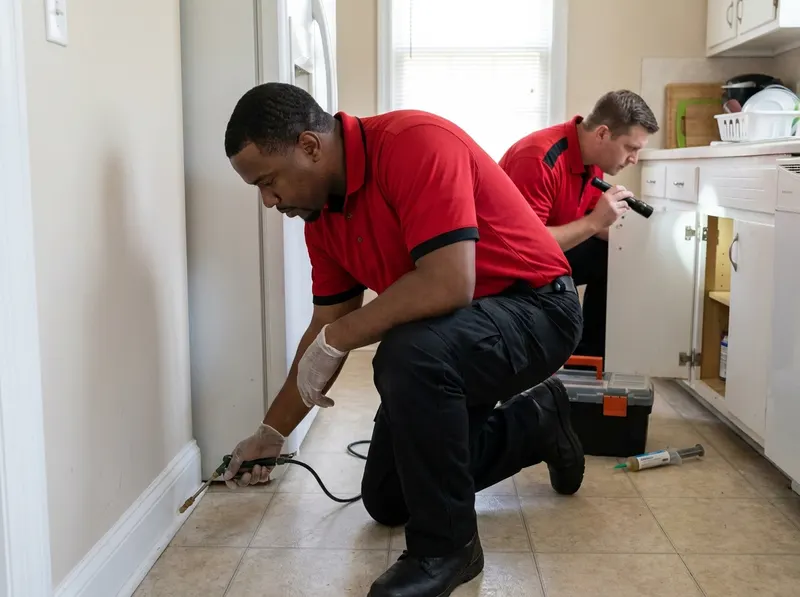
Cockroach infestations in Shelby County divide into two biological threats requiring distinct mechanical protocols. German cockroaches (Blattella germanica) nest interiorly within warm motor housings, electrical voids, and kitchen cabinetry, producing egg capsules (oothecae) containing 30 to 48 nymphs every 20 to 30 days. Conversely, American cockroaches (Periplaneta americana) inhabit damp crawlspaces, storm infrastructure, and tree hollows, entering structures through subfloor utility tracks and foundation weep holes. A single-room kitchen issue indicates localized harborage, whereas sightings across multiple rooms confirm aggregated populations requiring dual-phase baiting and active ingredient rotation as outlined by the EPA Integrated Pest Management standards. Spraying surface repellents indoors scatters German roaches into interior wall assemblies; successful suppression requires non-repellent formulations paired with juvenile hormone analogues.
Local environmental factors directly influence cockroach behavior across Memphis neighborhoods. High ambient humidity alongside the alluvial soils near Shelby Farms Park and Overton Park creates high exterior populations of American cockroaches that migrate inward during sustained 90-degree summer heat. Older historic structures in Midtown, Central Gardens, and Cooper-Young frequently utilize raised pier-and-beam foundations with damp subfloors, allowing perimeter roaches easy entry through historic baseboard margins. Slab-on-grade brick ranch configurations common in East Memphis, High Point Terrace, and Whitehaven experience seasonal intrusion via crawl vents and utility gaps beneath plumbing fixtures. Industrial and high-density zones across Binghampton, Berclair, Cordova, and Hickory Hill face acute German roach transfer through shared utility pipes and multi-tenant structural conduits regulated by the U.S. Department of Housing and Urban Development.
Eradication follows a disciplined three-stage sequence. 1. Structural moisture mitigation and mapping: Technicians identify plumbing leaks, check crawlspace moisture levels against standards from the National Pest Management Association, and place sticky monitoring traps behind major heat-generating appliances. 2. Non-repellent chemical placement: Precision micro-gel baits targeting digestive pathways are installed alongside synthetic insect growth regulators conforming to chemical safety guidelines from the National Institute for Occupational Safety and Health, arresting the molt cycle of juvenile nymphs. 3. Mechanical exclusion and exterior defense: Borate dust is injected into wall penetrations, and a 10-foot liquid perimeter barrier is established along foundation walls following Tennessee Department of Agriculture pesticide application rules. Structural waste zones comply with local disposal practices overseen by the City of Memphis Division of Public Works, while treatment records are maintained pursuant to standards published by the Entomological Society of America. Occupants do not need to evacuate for multiple days; non-volatile bait placements allow families and domestic pets to remain safely in the home without respiratory disruption.
Every job gets a firm, written price after a free on-site visit.
Tell us about your german & american cockroach remediation job in Memphis and we'll send a clear, written quote, usually the same day.
 RedCedar Pest Solutions