Stinging insect pressure in Shelby County peaks between June and October due to elevated relative humidity and sustained heat indexes tracked by the National Weather Service Memphis . In older architectural corridors…
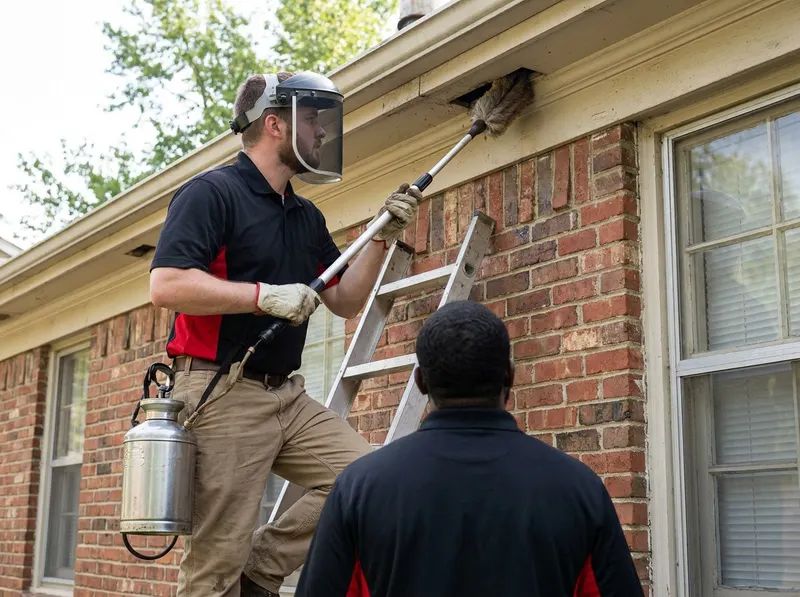
Stinging insect pressure in Shelby County peaks between June and October due to elevated relative humidity and sustained heat indexes tracked by the National Weather Service Memphis. In older architectural corridors such as Midtown and Central Gardens, settling mortar gaps, tongue-and-groove soffits, and porous lap siding allow aggressive colonies to bypass exterior envelopes. Yellow jackets (*Vespula*) regularly convert wall cavities, attic insulation, and crawlspace framing into sprawling subterranean or interior nests. These populations require targeted micro-aerosols and non-repellent dust formulations governed under the EPA Federal Insecticide, Fungicide, and Rodenticide Act. Exterior perimeter spray treatments fail when colonies penetrate void spaces; topical store-bought foams often aggravate workers, driving them deeper through drywall fissures, outlet boxes, and ceiling light fixtures directly into living spaces.
Technicians evaluate structural framing profiles across architectural styles, from post-war ranch homes in High Point Terrace and Berclair to expansive suburban framing in Cordova and East Memphis. Structural void defense combines high-pressure localized dusters loaded with pyrethroid compounds registered through the Tennessee Department of Agriculture Regulatory Services with expanding elastomeric sealants. Nests constructed along second-story fascia boards near rooflines adhere to ladder fall prevention guidelines overseen by the Occupational Safety and Health Administration. Ground-nesting yellow jacket colonies frequenting shaded clay soils in Cooper-Young and Binghampton receive direct subterranean liquid-soil drenching, preventing late-season queen production in line with ecological management standards detailed by the University of Kentucky Department of Entomology.
Structural void mitigation is differentiated from simple aerial hive elimination by physical access modification. When colonies colonize weep screeds, crawlspace subfloors, or vinyl soffits, technician protocols involve directional application tools certified via the National Pest Management Association. Once technicians neutralize aggressive flight vectors, technicians extract the structural core to prevent secondary carpet beetle infestations, fungal growth, or pheromone-driven re-infestations. For properties bordering heavily vegetated buffers near Overton Park or Shelby Farms Park, ongoing structural monitoring adheres to integrated pest management frameworks published by the University of Tennessee Extension IPM Program and regional insect biology guidelines documented by the Mississippi State University Extension Service. Perimeter exclusion closes gaps larger than 0.125 inches using copper mesh conforming to the ASTM International wire specifications to stop incoming queens during autumn dispersal phases, supported by urban insect dispersal studies from UGA Cooperative Extension.
Every job gets a firm, written price after a free on-site visit.
Tell us about your stinging insect nest removal & void defense job in Memphis and we'll send a clear, written quote, usually the same day.
 RedCedar Pest Solutions